You know, when it comes to batteries, their capacity is a pretty big deal—it's key for how well they work and how long they'll last. Getting a good grip on what "Capacity In Battery" really means can help you use them more efficiently and make them last longer. I recently read in a 2022 report by Allied Market Research that the worldwide market for lithium-ion batteries is expected to hit a staggering $139.2 billion by 2026. Crazy, right? That kind of growth really shows just how much folks are craving powerful, reliable batteries these days.
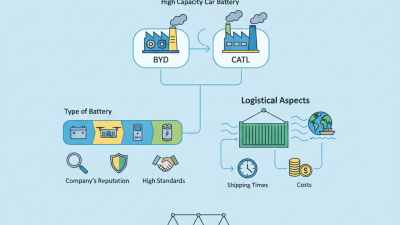
When you're picking out a battery, like for your car or a gadget, it’s super important to think about the specific type and size you need. For example, a High Capacity Car Batterycan give your vehicle a boost in performance and also last longer. I saw a study from NREL that says choosing the right capacity can actually boost youR Battery’s lifespan by up to 30%. That’s a pretty big deal, right? It just highlights why figuring out the right capacity is so crucial.
But honestly, a lot of people tend to overlook some of the nitty-gritty details, like discharge rates or how temperature affects the battery. Skipping over those things can lead to underwhelming performance or even shortening the battery’s life. With tech constantly evolving, staying up-to-date and educated about the latest in Battery Tech is more important than ever. Being in the loop with new research and info means you can make smarter choices, and honestly, it’s a game changer for how batteries are used, whether it’s in your phone, car, or even big industrial stuff.

Understanding battery capacity is crucial for anyone relying on portable devices. Battery capacity refers to the total charge a battery can store, typically measured in milliampere-hours (mAh). A higher capacity means longer usage time between charges. This understanding is vital for optimizing device performance and ensuring reliability.
When considering battery capacity, aim for compatibility with your needs. If you use power-intensive applications, a higher capacity battery will serve you better. Regularly check battery health. If it degrades, even high-capacity batteries may not perform optimally.
Tips: Avoid complete discharges regularly. This practice can shorten battery life. Charge your device when convenient, rather than waiting until it’s nearly empty. Stay aware of environmental factors. Extreme temperatures can impact battery performance significantly.
This chart illustrates the relationship between battery capacity (in milliampere-hours) and discharge rates (in amperes) for optimal performance. As the discharge rate increases, the effective battery capacity typically decreases.
When measuring battery capacity, several factors come into play. Understanding these can lead to optimal performance. Temperature variations can significantly affect capacity readings. Batteries tend to perform differently in hot or cold conditions. An extremely cold environment may reduce the effective capacity of a battery. Conversely, overheating can lead to quicker degradation.
Another aspect is the discharge rate. High capacity drone batteries deliver different performance outcomes based on how quickly energy is drained. Rapid usage may lead to apparent capacity loss during tests. The age of the battery must be considered as well. As batteries age, their ability to hold capacity diminishes. Knowledge of these factors can help in making informed assessments.
Regular monitoring and testing are essential for reliable results. Using standardized methods in controlled environments yields better insights. Even minor discrepancies can influence effectiveness. Analyzing these conditions provides a clearer picture of potential performance issues. Making sense of these intricacies is key for maximizing battery capacity and ensuring longevity.
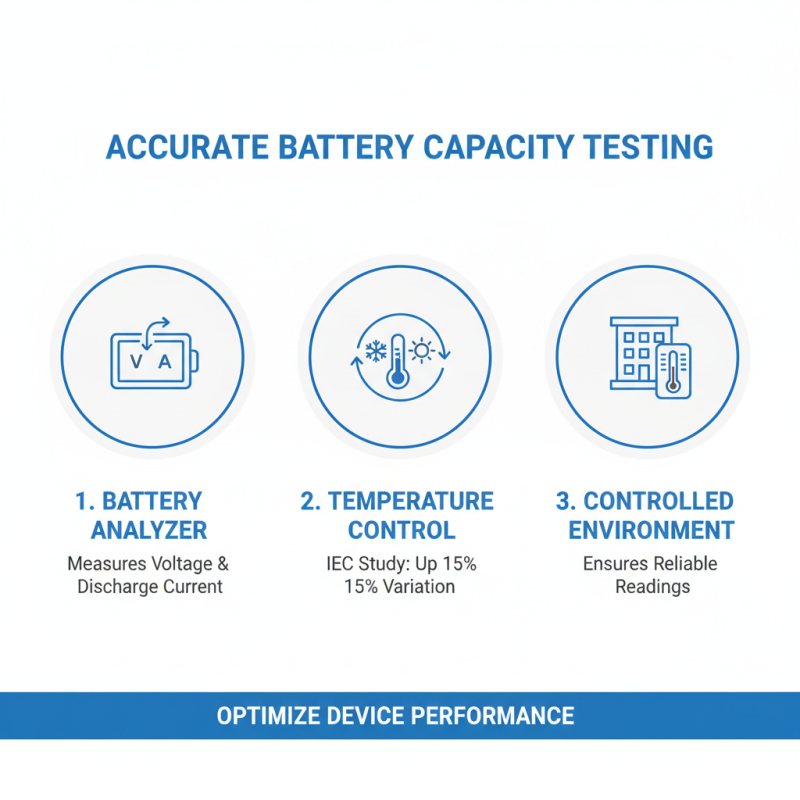
Testing battery capacity accurately is essential for ensuring peak performance in devices. Several methods exist for this purpose. One common approach involves using a battery analyzer, which measures the voltage and discharge current to determine capacity. A study by the International Electrotechnical Commission noted that accurate readings can vary by up to 15% due to temperature fluctuations. This highlights the importance of conducting tests in a controlled environment.
Another method is the constant load test. By applying a predetermined load and monitoring the discharge time, users can gain insights into capacity. However, this method may create inconsistencies, especially if the load is not stable. A report from the Battery University indicates that testing should ideally be done with loads that mimic real-life usage.
It's also crucial to consider the battery's age. Older batteries often show reduced capacity, leading to misleading results if not accounted for. Regular assessment can inform when a battery reaches its end of life. Implementing these testing methods can optimize performance but requires diligence and reconsideration of testing conditions.
Understanding battery capacity ratings is essential for optimal performance. Battery capacity is typically measured in ampere-hours (Ah) or milliampere-hours (mAh). Higher ratings indicate longer potential usage time. For example, a battery rated at 2000 mAh can theoretically deliver 2000 milliamps for one hour. However, real-world performance often varies based on factors, including discharge rates and temperature fluctuations.
When Checking Battery Capacity, keep in mind that not all batteries perform equally. A 3000 mAh lithium-ion battery might provide more power than a similarly rated nickel-cadmium battery. Reports indicate that lithium-ion batteries generally offer better energy density. This means they deliver more energy per unit weight. Research shows that temperature impacts battery efficiency. For every 10°C increase, capacity may drop by about 10% in some battery types.
It's beneficial to monitor capacity over time. Regular checking ensures users detect performance degradation early. A battery that once held a full charge may slowly decline. Recognizing this decline is key to maintaining devices. In a recent study, users reported a 25% reduction in capacity after 500 charge cycles. Staying informed about these specifications allows for informed decisions on battery replacements and device use.
| Battery Type | Nominal Capacity (Ah) | Voltage (V) | Energy (Wh) | Use Case |
|---|---|---|---|---|
| Li-ion | 3.0 | 3.7 | 11.1 | Smartphones |
| NiMH | 2.5 | 1.2 | 3.0 | Toys |
| Lead Acid | 100 | 12 | 1200 | Cars |
| Li-poly | 2.2 | 3.7 | 8.14 | Drones |
| NiCd | 1.5 | 1.2 | 1.8 | Power Tools |
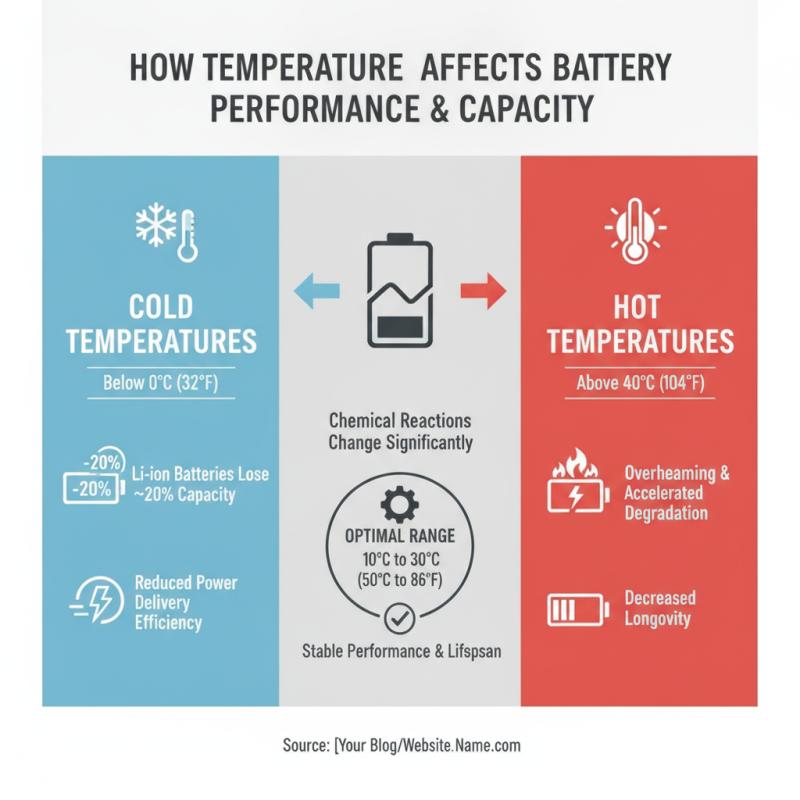
Temperature plays a critical role in battery performance and capacity. As temperatures rise or fall, the chemical reactions within batteries can change significantly. Studies show that Li-ion batteries lose about 20% of their capacity at temperatures below 0°C and can overheat and degrade at high temperatures, particularly above 40°C. This temperature sensitivity impacts not just longevity, but also the efficiency of power delivery.
When operating in extreme environments, it is essential to monitor the temperature closely. High heat may lead to swelling or leakage. Conversely, cold weather can result in sluggish performance. For optimal performance, maintaining a stable temperature range is crucial. Most batteries operate best at a moderate temperature between 20°C and 25°C.
**Tips:**
- Insulate your batteries to guard against temperature extremes.
- Consider using thermal management systems for devices in challenging environments.
- Regularly check battery health metrics to assess the impact of temperature changes.
Understanding these factors can lead to better battery longevity and reliability. The concept of Smart Battery Capacity emphasizes adapting usage based on these conditions, optimizing performance for various applications. Making small adjustments today can yield significant benefits tomorrow.
Maximizing battery lifespan and efficiency is crucial for optimal performance. Research shows that temperature significantly affects battery life. Operating a battery in extreme temperatures can reduce its lifespan by up to 30%. Keeping batteries in a moderate environment helps maintain their capacity and longevity.
To conserve battery health, avoid complete discharges. Maintaining a charge between 20% and 80% optimizes performance. This strategy is well-supported by industry reports. For instance, a study from the International Energy Agency indicates that cycling batteries within this range can enhance their life cycles significantly.
Tips: Charge your High-Capacity Drone Battery regularly, ideally after each use. Avoid leaving it idle for extended periods. Regular maintenance is essential; check connectors and clean terminals to prevent corrosion. These practices can ensure that your battery operates efficiently and lasts longer.
Developing a keen understanding of battery chemistry can also empower users. Knowing how different factors, like charge cycles and usage patterns, impact battery performance is essential. Reflecting on your usage habits can lead to better decisions regarding battery care.
When upgrading your battery, consider your specific needs. Your device's power requirements play a crucial role. Not all batteries fit every device. Check the specifications carefully. A battery that offers high capacity may not always be the best choice. Compatibility and performance should determine your selection.
Assess the intended use of your device. If it's for daily tasks, a moderate capacity may suffice. For gamers or heavy users, seeking a higher capacity is wise. Remember, a powerful battery can also lead to overheating issues. Test different capacities to see what works best for you. There’s no one-size-fits-all solution.
Choosing the right battery involves understanding trade-offs. Higher capacity often means a larger size. Make sure it fits in your device. Read reviews and consult experts for recommendations. Don’t rush the decision. Take your time to evaluate your options. Users often regret hasty choices. Reflection can lead to a more satisfying upgrade experience.
Maximizing flight time is a critical concern for drone enthusiasts and professionals alike. A significant breakthrough in this field is the advancement of high voltage lithium polymer (HV LiPo) batteries, which redefine energy efficiency and performance in drone technology. Unlike traditional lithium batteries that typically operate at 3.7V per cell, HV LiPo batteries feature an enhanced voltage of 4.4V or more per cell. This increase in single-cell voltage leads to remarkable improvements in energy density and discharge rates, allowing for an energy release that can exceed the capabilities of conventional batteries by 10% to 30%.
The design of HV LiPo batteries is particularly advantageous for those utilizing multi-cell configurations, such as 12S, 14S, and 16S setups. These configurations provide superior energy output while maintaining a lightweight profile, essential for maximizing drone endurance and load capacity during flight. The extensive flight time achieved with HV LiPo technology makes it an ideal choice for aerial photography, surveying, and other applications where extended operation without frequent recharging is paramount. With trusted production practices in place, high voltage batteries are available from various suppliers, ensuring quality and reliability for all users, facilitating the next generation of drone capabilities.
: Use a battery analyzer to measure voltage and discharge current. Ensure a controlled environment for reliable results.
It applies a set load to the battery and monitors discharge time to gauge capacity. Stability of the load matters.
Temperature affects chemical reactions within batteries. Extreme conditions can lead to reduced capacity or damage.
At temperatures below 0°C, Li-ion batteries lose around 20% of their capacity, affecting performance.
Over 40°C, batteries may overheat, swell, or leak. High heat significantly degrades battery life.
Yes, older batteries may show inaccurate capacity. Regular checks can indicate their end of life.
Insulate batteries, use thermal management, and regularly check battery health metrics.
Regular assessments are essential, especially as batteries age or experience environmental stress.
Most batteries perform best between 20°C and 25°C. Maintaining this range extends their longevity.
Failing to control temperature can lead to misleading results and inconsistent performance assessments.
The article "How to Determine Battery Capacity for Optimal Performance?" delves into the essential concept of capacity in battery, highlighting its definition and significance in various applications. It examines the key factors that influence battery capacity measurements, including internal resistance, discharge rates, and age. The article further outlines accurate methods for testing battery capacity, ensuring consumers can assess their power sources effectively.
Moreover, it discusses how environmental factors, such as temperature, can impact battery performance and overall capacity. Best practices for maximizing battery lifespan and efficiency are presented, emphasizing proper maintenance and usage strategies. Finally, the article offers guidance on upgrading and selecting the right battery to meet specific needs, ensuring optimal performance and reliability in diverse settings.