Picking out the right 5 Inch Fpv Drone Battery can really make a big difference in how your drone performs. I mean, according to the Drone Industry Insights report, battery life actually makes up about 30% of a drone’s overall efficiency. So, going for a better quality battery isn’t just a small upgrade—it can significantly extend your flight time and cut down on those annoying downtimes. Honestly, choosing the right one can feel pretty overwhelming with all the different specs and capacities out there.
A lot of brands like Tattu and Gens Ace offer pretty impressive lithium polymer (LiPo) batteries specifically designed for 5 Inch FPV drones. These batteries don’t just affect how stable your flight is—they also play a role in how nimble and responsive your drone feels. Skipping on proper Battery Selection can sometimes lead to poor performance or even crashes—definitely not something you want.
Getting a good grasp on voltage and capacity will help you make smarter choices. And don’t forget about the weight! A heavier battery can actually hurt your flight performance, even if it seems like a minor detail. Honestly, chatting with other pilots, reading reviews, and reflecting on your own experiences can help you pick reliable brands and the right Battery Type. Doing a bit of homework here really pays off, making sure you get a solid battery that boosts your flying adventures rather than holding you back.
How Battery Specifications Impact 5 Inch FPV Drone Performance
Choosing the right battery for a 5 inch FPV drone is crucial. Battery specifications greatly influence the drone's performance. Key factors include voltage, capacity, and discharge rate. Each of these affects flight time, power delivery, and overall efficiency.
For instance, a battery with a higher capacity can extend flight duration. However, it may increase weight. This balance is vital. If the battery is too heavy, it could reduce maneuverability. On the flip side, using a battery with a lower discharge rate might restrict throttle response during high-speed maneuvers.
It’s easy to overlook the importance of choosing a suitable 5 Inch Drone Battery. Many pilots may prioritize weight over performance, or vice versa. A well-rounded approach ensures optimal flight experiences. Small mistakes can lead to poor performance outcomes. Reflecting on battery choices can lead to better flights. Be mindful of how specifications impact your overall performance.
Battery Specifications Impact on 5 Inch FPV Drone Performance
Understanding Battery Chemistry: LiPo vs. Li-ion for FPV Drones
When selecting a battery for your 5-inch FPV drone, understanding chemistry is vital. The two primary options are LiPo and Li-ion batteries. LiPo, or lithium polymer, is known for its high discharge rates. This can be beneficial for quick bursts of speed and agility in racing. However, LiPo batteries can be sensitive. Mismanagement can lead to puffing or even fire. Regular monitoring and careful handling are essential.
Li-ion batteries, on the other hand, excel in longevity and energy density. They offer a longer lifespan than LiPo batteries. This makes them suitable for extended flight times. The trade-off lies in the discharge capabilities. They may not provide the same punch as LiPo in high-demand situations. If you prioritize endurance over power, then Li-ion could be the better choice.
If you are considering both types, think about your flying style. Are you racing or casually flying? This choice can heavily influence which battery might work best. Additionally, remember that the right battery size matters. A 7-Inch Drone Battery often provides more power than a standard 5-inch option. This can lead to heavier frames and different flight characteristics. Balancing weight and power is crucial for performance.
Calculating the Ideal mAh Rating for Flight Time and Weight Balance
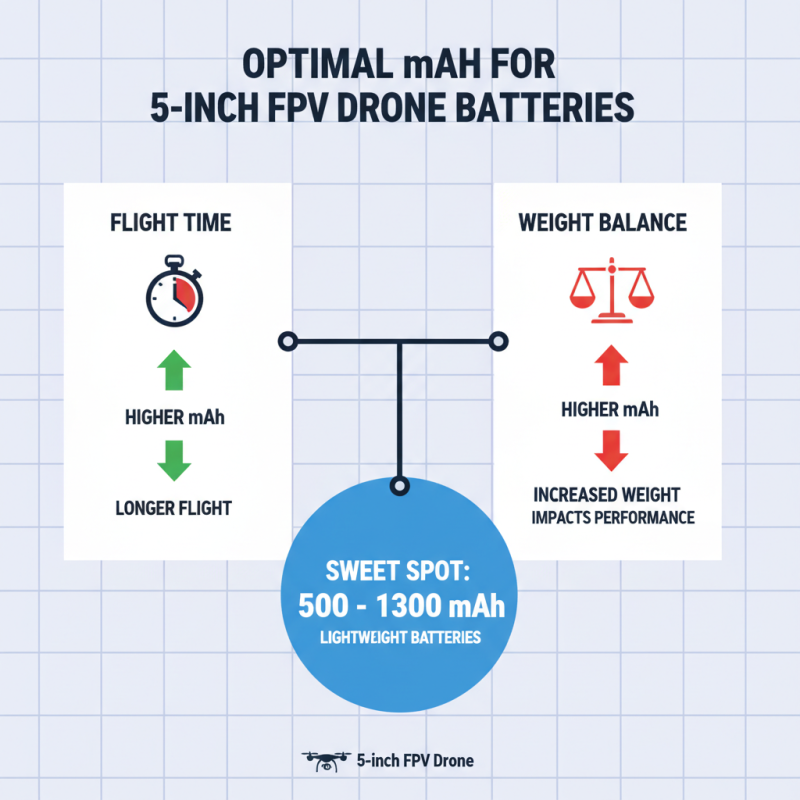
When selecting the right 5 inch FPV drone battery, the mAh rating is crucial. It influences both flight time and weight balance. A higher mAh rating generally means longer flight times. However, larger batteries also add weight, impacting performance. According to various industry reports, lightweight batteries typically range from 500 to 1300 mAh.
Consider a 1000 mAh battery. For a 5 inch drone, this capacity can offer about 6 to 8 minutes of flight, depending on the drone's weight and efficiency. It is essential to assess your typical flight needs. Many enthusiasts prefer a balance—a battery that allows enough flight time without significantly sacrificing agility. The right choice will vary for racers versus casual flyers.
Tips: Always check the drone's specifications. Ensure the mAh rating aligns with your flying style. Also, weigh the benefits of a lighter battery against the potential decrease in flight time. Remember, no single solution fits all. It’s wise to experiment with different 5 Inch Drone Battery Sizes to find your perfect match. Adjustments may reveal hidden advantages or areas for improvement in your setup.
Evaluating Discharge Rates: C-Ratings Explained for FPV Drones
When selecting a battery for your 5-inch FPV drone, understanding C-ratings is crucial. The C-rating indicates the battery's discharge capability. A higher C-rating means more current delivery, allowing for more powerful flight. For example, a 1000mAh battery with a 20C rating can output 20A of continuous current. This relationship is vital for maintaining thrust during high-speed maneuvers.
However, it's important to note that a higher C-rating often comes at a cost. Many pilots may feel tempted to opt for top-tier batteries, assuming they will enhance performance. Yet, not all drones require the maximum output. Evaluating your drone's specifications and typical flight style can help in making a wiser choice. Every drone setup is unique, and matching the battery's C-rating to your needs is essential. Some may end up with batteries that exceed the drone's requirements, leading to overkill and unnecessary weight.
Additionally, even experienced pilots sometimes overlook battery quality. While finding a reputable supplier is crucial, verifying specific ratings is just as important. Seek advice from the FPV community, but always cross-check information. Balancing between performance and safety can be a challenge. Assess your flying habits, and test various options before settling on a battery. Your drone's performance may hinge on this decision, so take it seriously.
Choosing the Right Battery Connector Types for FPV Drones
When selecting a battery for your 5-inch FPV drone, connector type plays a crucial role. Many hobbyists overlook this aspect, yet the right connector ensures proper power delivery and overall performance. Common types include XT60, XT30, and Deans connectors. Each has its own specifications and advantages. For example, XT60 connectors can handle up to 60A, making them suitable for high-drain applications.
Connector choice impacts weight and balance. A heavier connector can alter the drone's flight dynamics. While some believe that soldering leads ensures a more secure connection, improper soldering can lead to failure during flight. A report by the Drone Industry Insights highlighted that 15% of drone failures are attributed to electrical issues, including connector failures. This underscores the importance of a reliable connection.
It's essential to consider compatibility with your battery and ESC. Mismatched connectors may lead to overheating or battery damage. Ignoring this detail can cost you both time and money. Ensuring that your connector matches the system specifications guarantees a smooth flying experience. Many pilots recommend testing different types before making a final choice.
How to Choose the Right 5 Inch FPV Drone Battery? - Choosing the Right Battery Connector Types for FPV Drones
| Battery Type | Capacity (mAh) | Voltage (V) | Connector Type | Weight (g) |
| LiPo | 1300 | 4S (14.8V) | XT60 | 150 |
| LiPo | 1500 | 4S (14.8V) | XT30 | 200 |
| LiHV | 1000 | 4S (14.8V) | XT60 | 125 |
| LiPo | 1800 | 4S (14.8V) | EC3 | 220 |
Impact of Battery Weight on Flight Stability and Maneuverability
When selecting a 5-inch FPV drone battery, weight plays a crucial role in flight stability and maneuverability. A battery that is too heavy adds unnecessary load, making the drone sluggish. It can struggle during sharp turns or quick drops. This impacts not just performance but also can shorten the flight time significantly. The drone's agility relies heavily on its ability to respond to pilot inputs swiftly.
Flight tests have shown that drones with lighter batteries can climb faster and maneuver with ease. A well-balanced weight distribution improves handling. Pilots often notice a difference in responsiveness when flying with various battery weights. However, lighter batteries may come with shorter life spans, creating a trade-off scenario.
Moreover, sometimes the specifications sound perfect, but in practice, they might not meet expectations. Choosing the right battery requires testing and adjusting. A seemingly ideal battery might not perform well under certain conditions. Therefore, experimenting with different weights while considering your flying style is essential. Each pilot's needs are different, and reflection on what works best is key to enhancing your flying experience.
Maintenance Tips to Extend the Lifespan of FPV Drone Batteries
Proper maintenance of FPV drone batteries is crucial for maximizing their lifespan. Studies show that improper handling can reduce battery life by up to 40%. To extend the life of your 5 inch FPV drone battery, consider charging it carefully. Avoid overcharging; it can lead to thermal runaway. The ideal charging range is between 3.7V and 4.2V per cell. This ensures optimal performance.
Storage is another vital aspect. LiPo batteries, commonly used in RC FPV drone batteries, should be stored at a voltage of around 3.8V per cell. This prevents swelling and prolongs battery life. Additionally, keep them in cool, dry environments. Excessive heat can damage internal components, leading to reduced efficiency. Regularly check battery health with a voltmeter to avoid surprises during flight.
Lastly, cycle your batteries regularly. A study found that cycling charges significantly enhances battery health. Simply put, using your battery and then allowing it to rest maximizes its longevity. Reflection on your charging habits and storage techniques can offer insights into improving battery care. Prioritize these maintenance practices to achieve the best performance from your FPV drones.
Exploring the Impact of High-Capacity Semi-Solid State Batteries Like JENTC LI-HV 12s 22000mAh 10C on Drone Performance and Efficiency
The evolution of battery technology has played a crucial role in enhancing the performance and efficiency of drones, particularly in the realm of high-capacity semi-solid state batteries. One notable advancement is the development of custom lithium battery packs that offer substantial energy storage capabilities. For instance, a battery with a capacity of 22000mAh and a voltage of 44.4V provides significant advantages for drone applications, enabling longer flight times and improved operational efficiency.
According to industry reports, high-capacity batteries can increase a drone's operational range by 30-50%, allowing for extended missions without the need for frequent recharging. This is especially critical for commercial applications such as agriculture, surveillance, and delivery services, where maximizing flight time directly correlates with productivity and cost-effectiveness. Furthermore, semi-solid state batteries have demonstrated superior thermal stability compared to traditional lithium-ion counterparts, reducing the risk of overheating and enhancing overall safety during operation.
The capability of a drone to carry additional payloads is equally influenced by advancements in battery technology. A lightweight design combined with high energy density allows drones to transport more equipment, which is essential for tasks such as aerial photography or cargo delivery. As the industry shifts towards adopting these innovative battery solutions, the impact on drone efficiency and performance will continue to grow, setting new benchmarks in the field of aerial technology.
FAQS
: Battery specifications affect flight time, power delivery, and overall efficiency, influencing performance significantly.
A higher capacity battery typically extends flight duration but may increase weight, affecting maneuverability.
An overly heavy battery can reduce a drone's agility, hindering its maneuverability during flight.
A lower discharge rate can limit throttle response during high-speed maneuvers, affecting performance.
Ratings between 500 to 1300 mAh are common, with a 1000 mAh battery providing around 6 to 8 minutes of flight.
Consider your flight needs, and choose a battery that provides sufficient time without compromising agility.
Striking a balance is essential. Prioritize both factors to ensure optimal flight experiences; don’t overlook either.
Yes, trying various sizes may reveal advantages and areas for improvement in your drone’s setup.
No, no single solution fits all. It's important to align battery choice with your flying style and needs.
Conclusion
Choosing the right 5 Inch FPV Drone Battery is crucial for optimal performance and flight experience. Understanding battery specifications, including chemistry differences between LiPo and Li-ion, plays a significant role in decision-making. The mAh rating directly affects flight time and weight balance, while the C-rating helps evaluate discharge rates, essential for high-performance flying.
Furthermore, selecting the appropriate battery connector type and considering battery weight are vital for maintaining flight stability and maneuverability. Implementing regular maintenance tips can also extend the lifespan of your FPV drone batteries, ensuring longevity and reliability in your aerial adventures. With these insights, you can make informed choices for your 5 Inch FPV Drone Battery, enhancing overall flight efficiency.