Picking the right inspection Drone Battery really can make a big difference in your aerial projects. With so many options out there, each with its own features and specs, it can get a bit overwhelming. The trick is understanding what *you* actually need.
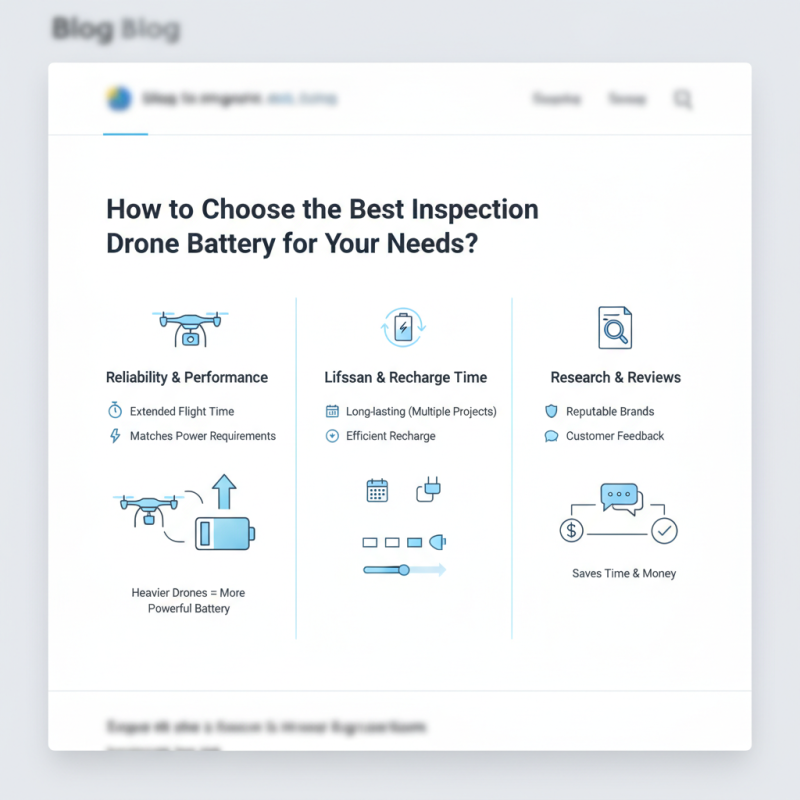
Your drone’S Battery should be reliable and perform well. The right one will give you extra flight time and should match what your inspection tasks demand. For example, if you've got a heavier drone, you might want to go for something more powerful, like thePower Inspection Drone Battery.
Don't forget to look at things like how long the battery lasts and how quickly it recharges. A good quality battery can handle several projects without needing to replace it constantly. But keep in mind, not all batteries are created equal — some might not meet your expectations. It’s a smart idea to check out reputable brands and read reviews from other users. Doing a little research upfront can save you a lot of hassle and money down the line.
Factors to Consider When Selecting an Inspection Drone Battery
When selecting an inspection drone battery, several factors deserve attention. First, consider the battery capacity, measured in milliamp-hours (mAh). Higher capacity generally means longer flight times, which is essential for extensive inspections. A battery with lower mAh may force you to land more frequently, disrupting workflows. Aim for a balance between capacity and weight, as a heavy battery can impact aerial performance.
Pay attention to the battery’s discharge rate, noted as the C-rating. A higher C-rating allows for more power during intensive maneuvers. This can be vital in scenarios that require fast responsiveness. Additionally, assess whether the battery is lithium polymer (LiPo) or lithium-ion (Li-ion). LiPo batteries are lightweight but may require more careful handling.
Tips: Look for batteries with smart features that report charge levels or potential overheating. Monitor your battery’s health regularly to avoid unexpected failures. Understand that battery longevity can be influenced by how often you charge and discharge it. Frequent cycles can shorten lifespan. Always reflect on your charging habits to maximize efficiency.
Types of Batteries Available for Inspection Drones
When selecting an Inspection Drone Battery, understanding the types available is key. Common battery types include LiPo, Li-ion, and NiMH. Each has its benefits and drawbacks.
LiPo batteries are lightweight and offer high energy density. They provide excellent performance for aerial inspections. However, they require careful handling and specific charging practices. Overheating can lead to damage.
Li-ion batteries are more stable, making them safer for users. However, they may not perform as well in extreme conditions.
NiMH batteries are less common for drones but offer good longevity. They are also more resilient to temperature variations.
Ultimately, choosing the right Inspection Drone Battery involves assessing your specific needs. Consider flight time, charging habits, and operating conditions. Reflect on your experience with different battery types. It’s crucial to prioritize safety and performance. Understanding these differences will ensure you make an informed decision.
Understanding Battery Capacity and Runtime Requirements
When selecting an inspection drone battery, understanding battery capacity is crucial. Battery capacity, measured in milliamp hours (mAh), determines how long a drone can operate before needing a recharge. A higher capacity means longer flight time, but don't solely rely on this number. Consider the drone's power consumption and weight. Heavier batteries can reduce overall efficiency, cutting into flight time.
Runtime requirements also play a vital role in your choice. Think about the types of inspections you conduct. Shorter, routine checks may only need 15-20 minutes of flight time. In contrast, large inspections might require 30 minutes or more. Testing various batteries in real scenarios can reveal unexpected inefficiencies. Some users find that advertised runtimes don't match their experiences.
Choosing the right Inspection Drones Battery isn't just technical. It requires a blend of knowledge and personal experience. Reflect on your specific needs. Research various battery technologies, such as lithium-ion versus lithium-polymer. Ultimately, making an informed choice can improve your inspection efficiency.
Battery Capacity and Runtime Comparison for Inspection Drones
Evaluating Charging Time and Cycle Life of Drone Batteries
Selecting the right drone battery involves assessing critical factors like charging time and cycle life. Many modern batteries use lithium polymer (LiPo), which typically charges within one to two hours. However, some high-capacity batteries may take longer, affecting your operational efficiency. Understanding these charging times is essential for commercial operations that rely on quick turnaround between flights.
Cycle life is another vital consideration. Most drone batteries have a cycle life ranging from 300 to 500 charge cycles. This lifespan impacts long-term performance and cost-effectiveness. Batteries with a higher cycle life may outperform those with shorter lifespans, resulting in fewer replacements and better overall value.
Tip: When selecting a drone battery, check specifications for both cycle life and charging times. Aim for a balance that fits your use case.
Batteries can degrade faster than expected due to overheating or improper storage. Frequent charge cycles can lead to diminished performance, particularly if the battery is not monitored. Keep an eye on the health of your batteries to avoid sudden drops in flight time.
Tip: Always store batteries at a cool temperature. Regularly inspect for swelling or damage to ensure optimal performance.
Comparing Weight and Size Constraints for Drone Applications
When selecting an inspection drone battery, weight and size are key factors. Drones designed for detailed inspections often operate in tight spaces. A lighter battery can enhance agility, allowing more precise movements. Conversely, larger batteries might extend flight time but introduce balance issues. Understanding the drone's application is essential.
The overall weight affects flight performance directly. A heavier battery can reduce the drone's efficiency, impacting range. It’s crucial to find a balance. Testing different sizes during actual flights can reveal optimal configurations. Some users face challenges when integrating batteries that seem perfect on paper. Real-world conditions often bring unforeseen complications.
Battery shape also matters. A compact battery may fit nicely in one type of drone but might not be suitable for another. Users often overlook this detail. Take time to experiment and gather data from flights. Documenting performance variations helps refine choices. Every decision should consider the drone's design and intended use. Make adjustments based on practical experience.
Assessing Environmental Conditions Impact on Battery Performance
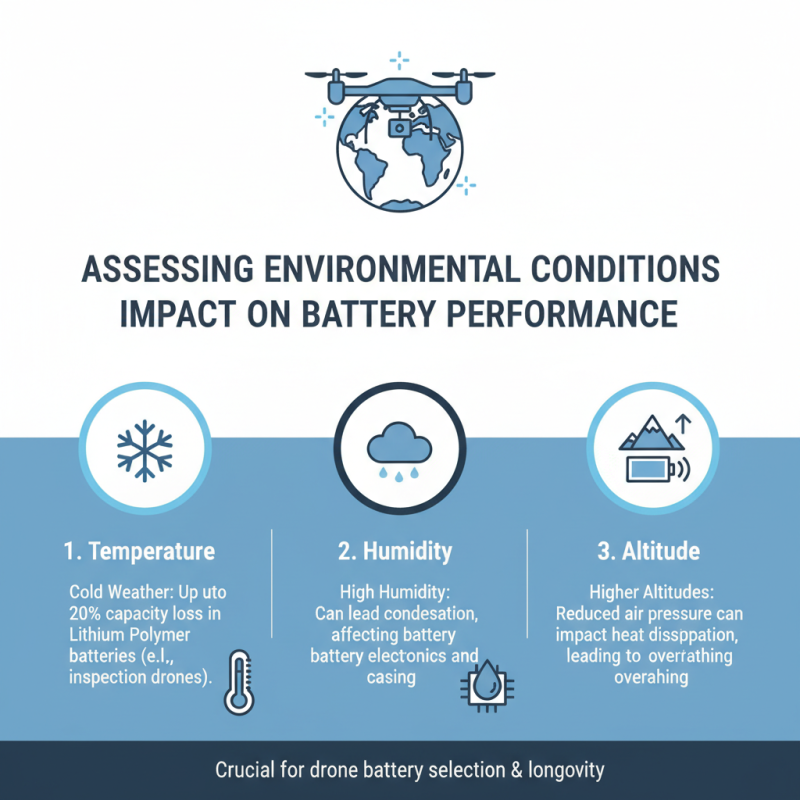
When selecting a drone battery, understanding environmental conditions is crucial. Temperature, humidity, and altitude significantly affect battery performance. For instance, reports indicate that lithium polymer batteries, commonly used in inspection drones, can lose up to 20% of their capacity in very cold weather.
Humidity can also pose challenges. High moisture levels may lead to corrosion or battery swelling. Tech experts suggest a humidity level below 60% for optimal battery longevity. Many users overlook these factors, not realizing they can reduce flight times drastically.
Altitude impacts battery efficiency as well. As altitude increases, air density decreases, requiring more power to maintain lift. A study shows that battery performance drops by about 10% with every 1,000 meters of elevation. When choosing a Quad Drone Battery, consider its specifications under various conditions. It's essential to evaluate how environmental elements can affect your inspection operations. Making an informed decision could save time and increase reliability during missions.
Budgeting for Quality: Cost vs. Value in Drone Batteries
Choosing the right drone battery involves considering both cost and quality. A budget-friendly option may save money initially. However, it can lead to higher replacement costs later. Balancing these factors is crucial for drones used in inspections.
Quality often correlates with durability and performance. A reliable battery ensures consistent operation during critical flights. For instance, a Drone Battery 3.7v might seem expensive compared to cheaper alternatives. Yet, its longevity and efficiency can make it a worthwhile investment. Users should evaluate their specific needs.
Not all tasks require high-performance batteries. For casual or short inspections, less costly options may suffice. Still, it’s essential to research battery specifications. Endurance and charge cycles matter significantly. Be wary of prices that seem too good to be true. They often lack the quality needed for serious applications.
Optimizing Drone Performance: A Comprehensive Guide to the JENTC Lipo Battery FPV 6s 8000mAh 25C for UAV Applications
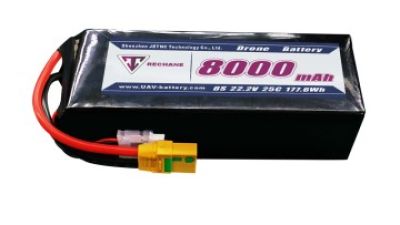
When it comes to optimizing drone performance, the choice of battery is crucial for effective UAV applications. The JENTC FPV 6s 8000mAh 25C lithium polymer battery is specifically designed to meet the demands of aerial enthusiasts and professionals alike. With a stable voltage output of 22.2V and a significant capacity of 8000mAh, this battery ensures extended flight times, allowing users to maximize their operational efficiency without the frequent need for recharging.
Safety and compliance are also paramount in battery selection for drones. This lithium polymer battery comes with RoHS, CE, and FCC certifications, ensuring that it adheres to strict safety standards while maintaining high performance. Additionally, it offers options for customization, making it an ideal choice for those looking to promote their brands or develop tailored energy solutions that meet specific needs. This blend of reliability, performance, and customization underscores its suitability in the rapidly evolving UAV market, providing a dependable power source that supports innovative aerial applications.
FAQS
: Battery capacity is measured in milliamp hours (mAh).
Heavier batteries can reduce efficiency and flight time.
Consider the drone's power consumption and weight.
Routine inspections may need only 15-20 minutes of flight time.
Testing can reveal inefficiencies that may not match advertised runtimes.
A lighter battery can improve agility, but larger batteries extend flight time.
Integrating batteries that seem ideal can lead to unforeseen complications.
Yes, battery shape can affect compatibility with different drone types.
Document performance variations during flights to inform your decisions.
Reflect on your specific needs and experiment with different configurations.
Conclusion
When selecting the best inspection drone battery for your needs, several factors must be considered. Understanding the types of batteries available is crucial, as each offers different performance characteristics. Key considerations include evaluating battery capacity and runtime requirements to ensure that the drone can operate effectively for the intended duration. Additionally, charging time and cycle life are important for maintaining consistent operation, while weight and size constraints can impact the drone's overall efficiency and functionality.
Environmental conditions can also significantly affect battery performance, so it's essential to assess how factors like temperature and humidity may influence operation. Lastly, budgeting for quality is vital; it's important to weigh the cost against the value of reliability and performance in inspection drone batteries. By taking these factors into account, you can make an informed decision that best meets your inspection needs.