Inquiry
Form loading...
0%

When you're looking into the 5 Inch Drone Battery Size, it’s easy to get caught up in the details that might seem minor but are actually pretty important. Honestly, understanding this stuff is key if you want your drone to perform well and stay compatible. Choosing the right battery can make a real difference — like giving you longer flight times and better overall efficiency.

A lot of folks tend to focus just on capacity, completely overlooking the size and weight. But, seriously, a battery that fits just right shouldn’t throw off your drone’s balance. Checking the Battery Size against what your drone needs can save you from wasting money and ending up with more frustration than you bargained for.

It’s worth taking some time to peek around and see what's out there. Sure, some new brands pop up promising cool features, but they might not have enough reviews to lean on. So, weigh the good and the bad of each option before making a call. Ignoring these little details could lead to a pretty disappointing flying experience, which nobody wants, right?

5 Inch Drone Battery Size What You Need to Know?

Understanding the Basics of 5 Inch Drone Battery Sizes

5 Inch Drone Battery Size What You Need to Know?

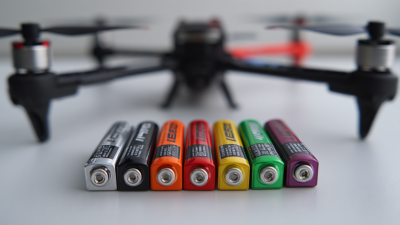
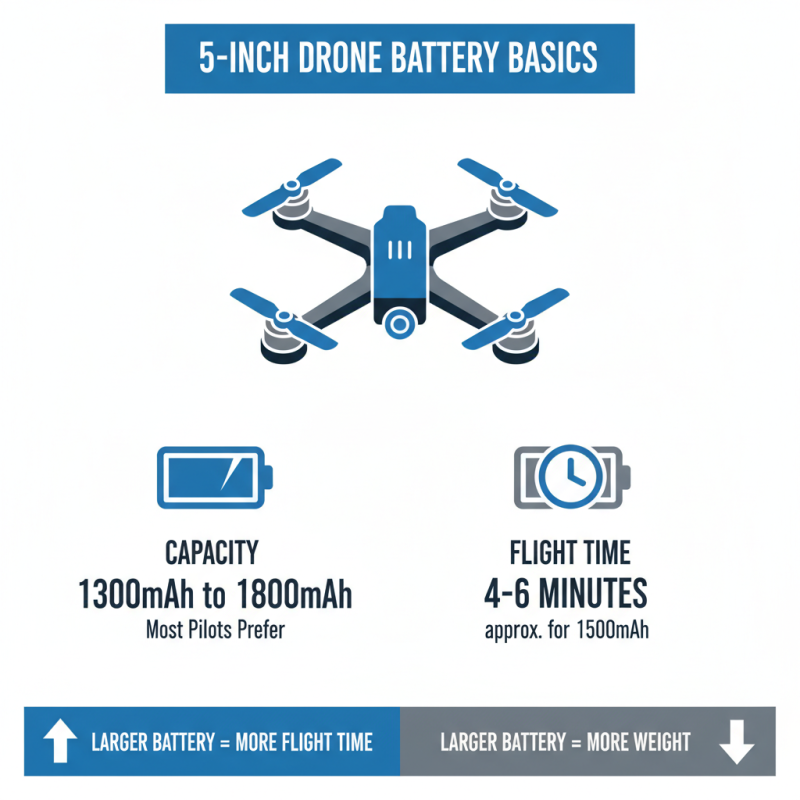
When considering 5-inch drones, battery size is a critical factor. A typical 5-inch drone battery is often measured in milliamp hours (mAh). Most pilots prefer batteries ranging from 1300mAh to 1800mAh. This range offers a good balance of weight and flight duration. Industry reports suggest that a 1500mAh battery can provide approximately 4-6 minutes of flight time. However, larger batteries may increase flight time. But, they also add extra weight.

Tips: Always check your drone's specifications before choosing a battery size. MismatcheD Batteries can affect performance.

Understanding battery chemistry is equally important. Lithium Polymer (LiPo) batteries are commonly used for drones. They are lightweight and provide high discharge rates. Yet, they require careful handling. Reports reveal that improper charging can lead to battery swelling or even explosions. Regularly check your batteries for signs of damage to ensure safety.

Tips: Store batteries at a moderate temperature. Extreme temperatures can degrade battery life.

Finding the right size for your drone can often be trial and error. Sometimes, pilots may overestimate their needs, leading to unnecessary weight. Balancing battery capacity with payload is vital. Pay attention to your drone's flight characteristics. The right battery can significantly improve your flying experience.

Common Battery Types for 5 Inch Drones

When it comes to 5 inch drones, understanding battery types is crucial. The battery affects flight time and performance. Most commonly, you’ll find lithium polymer (LiPo) batteries in use. These batteries are known for their high energy density. They are lightweight and provide excellent performance, making them ideal for 5 inch FPV drone setups.

However, there are drawbacks. LiPo batteries can be sensitive to charging and discharging cycles. They require careful handling and maintenance. They also have a relatively short lifespan compared to other types. Another option is lithium-ion batteries. They generally have a longer lifespan but weigh more. For a 5 inch FPV drone, balancing weight and flight duration is essential.

Don’t forget the connectors and discharge rates. These factors play a significant role in performance. Some pilots opt for overpowered batteries to extend flight times. But this can lead to additional risks, such as overheating. Be mindful of your battery choices and usage. Each decision has consequences for your flying experience.

Factors Affecting Battery Size and Capacity

When considering a 5-inch drone, battery size and capacity are crucial factors. The drone's design influences how much space is available for the battery. A compact build may limit the battery size. Conversely, a larger frame can accommodate bigger batteries, which increases flight time.

The weight of the battery plays a significant role too. Heavier batteries need stronger motors. This combination can affect flight efficiency. If the drone is too heavy, it may not perform well. Balance is key here. Moreover, the battery's chemistry can impact its power output and lifespan. LiPo batteries, for example, are common in drones. They are lightweight and provide high discharge rates.

Additionally, flight purposes dictate battery requirements. Racing drones demand a different power setup than cameras. Pilots must evaluate their needs carefully. There’s no one-size-fits-all solution. Each choice brings trade-offs. Recognizing this helps in making informed decisions.

5 Inch Drone Battery Size: Factors Affecting Capacity

How to Choose the Right Battery for Your 5 Inch Drone

Choosing the right battery for your 5 Inch Drone is crucial for optimal performance. Most 5 inch drones use LiPo batteries due to their high energy density. A typical choice is the 4S or 6S configuration, which offers a balance between weight and power. Reports indicate that a higher C rating improves discharge rates, enhancing flight times and overall responsiveness.

Battery capacity, measured in milliamp-hours (mAh), is essential. A 1300mAh to 1500mAh battery often suits racing drones. This range provides enough power for agility without excessive weight. However, some pilots prefer larger capacities, like 1800mAh, for extended flights. This strategy may lead to extra weight, impacting flight dynamics.

Charging and maintenance are also vital. Industry research reveals that improper charging can reduce a battery's lifespan significantly. Always use a compatible charger. Regularly check for puffing or damage, signaling a potential failure. These details matter when selecting your 5 Inch Drone Battery. Thoughtful choices ensure you maximize both efficiency and safety during your flights.

Maintenance Tips for 5 Inch Drone Batteries

5 Inch Drone Battery Size What You Need to Know?

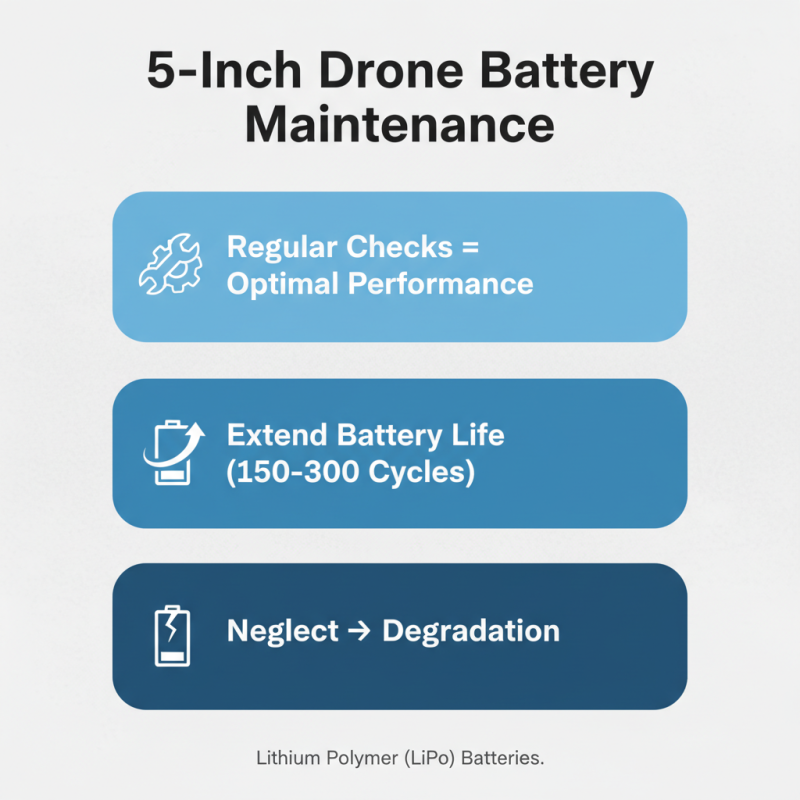
Maintaining a 5-inch drone battery is essential for optimal performance. Regular checks help extend battery life. The lifespan of lithium polymer (LiPo) batteries usually ranges from 150 to 300 cycles. However, neglect can lead to significant degradation.

Charge your 5-inch drone battery properly. Use a compatible charger with the right settings. Overcharging may cause swelling. If the battery gets hot during charging, it is a sign of potential failure. It's important to monitor these temperatures to prevent accidents.

Storage is also crucial. Keep the battery at a storage voltage of around 3.8V per cell. This helps preserve its health. Professional reports indicate that letting a drone battery discharge completely can reduce its effectiveness. If you have a 7-Inch Drone Battery, similar rules apply. Batteries in larger drones often require similar attention to maintenance. Consider these tips to enhance battery reliability over time.

Safety Considerations for Battery Usage in Drones

Battery safety is crucial when operating drones. A 5-inch drone battery can provide power, but it also poses risks. Overcharging can lead to fires. Always monitor charging times. A battery that gets too hot is a warning sign.

Proper storage of drone batteries matters. Store them in a cool, dry place. Avoid direct sunlight and high temperatures. Discharge your battery to safe levels if not in use. This helps maintain battery health.

Investing time in understanding your Drone Battery Size is vital. Each battery has different specifications and limitations. Read the guidelines carefully. Frequent misuse may result in performance issues. Reflect on your battery habits to enhance safety.

Future Trends in Drone Battery Technology and Sizes

As drone technology advances, battery size and efficiency play a crucial role. Future trends show a shift toward lighter, more compact batteries. These developments will enhance flight times and reduce the weight of drones significantly. Researchers are exploring solid-state batteries that could unlock new potentials in energy density. Improved energy storage means longer flight durations and the ability to transport heavier payloads.

Tip: Consider checking battery specifications before purchasing. Understand how different sizes impact your drone's performance and range.

Another trend is the integration of fast-charging technology. With this, users could recharge their drones quickly, maximizing usage in short bursts. However, faster charging can sometimes lead to overheating issues. This aspect needs careful consideration. There is also a growing interest in renewable energy sources. Solar panels integrated into drone designs could extend operational time without increasing battery size.

Tip: Regularly monitor your drone's battery health. This can help avoid potential failures during crucial flights. Always charge batteries in a controlled environment to prevent overheating.

Maximizing Drone Performance with JENTC LI-HV 6s 22000mAh Batteries: Insights from Industry Reports on Battery Technology Trends

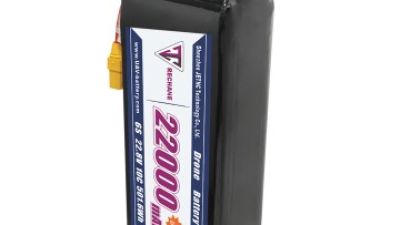
The era of drones has ushered in a need for advanced battery technology to support their increasing capabilities and demands. Among the latest developments in this field is the semi-solid custom lithium polymer battery pack featuring a remarkable capacity of 22000mAh and a voltage of 22.8V. These high-capacity batteries are designed to enhance the performance and endurance of consumer drones, significantly extending flight times without compromising power output.

According to industry reports, advancements in battery technology reveal a growing trend towards higher energy densities and efficiency. The introduction of batteries like the 6s 22000mAh variant exemplifies this trend, providing drone enthusiasts and professionals with the ability to conduct longer missions, capture high-resolution imagery, or monitor expansive areas without frequent recharges. The recent insights from market analyses indicate that batteries with higher capacity and lower weight ratios will be paramount in defining the next generation of drone applications, catering to sectors such as agriculture, surveillance, and logistics.

Furthermore, the emphasis on safety and certifications is becoming increasingly important as the drone industry expands. Products that meet standards such as RoHS, CE, and FCC not only ensure compatibility and reliability but also pave the way for wider acceptance and usage in various applications. With a warranty period ranging from 3 to 12 months, users can be assured of the quality and durability of these advanced battery solutions, ultimately maximizing drone performance in a rapidly evolving technological landscape.

FAQS

: What type of batteries are commonly used in 5-inch drones?

: Lithium polymer (LiPo) batteries are the most common choice due to their high energy density and lightweight nature.

What are some drawbacks of LiPo batteries?

They require careful handling and have a short lifespan compared to other battery types. Improper care can lead to issues.

How do I choose the right battery for my drone?

Consider the battery capacity, configuration, and discharge rates. A 1300mAh to 1500mAh battery is suitable for racing.

What should I watch for when charging my drone battery?

Monitor charging times and check for overheating. An overheating battery indicates potential problems—this requires immediate attention.

How should I store my drone batteries?

Store batteries in a cool, dry place. Keep them out of direct sunlight and high temperatures to maintain their health.

What is the importance of regular maintenance for drone batteries?

Regular checks for puffing or damage can prevent failures. Misuse and neglect affect performance and safety.

Can using overpowered batteries be risky?

Yes, while they may extend flight times, they can also cause overheating and other safety issues. Balance is important.

What is a higher C rating in batteries?

A higher C rating improves discharge rates. This enhances flight times but also can add weight, affecting performance.

How does battery weight affect flight?

Heavier batteries can impact the drone’s agility and flight dynamics. Balance weight with flight time for better performance.

What common mistakes should I avoid with battery usage?

Avoid improper charging and neglecting storage conditions. Reflecting on these habits can significantly improve safety and performance.

Conclusion

Understanding the 5 Inch Drone Battery Size is crucial for maximizing the performance and efficiency of your drone. In this article, we explore the common battery types compatible with 5 inch drones, highlighting the factors that affect both battery size and capacity. Making an informed choice when selecting the right battery is essential, as it impacts flight time, weight balance, and overall drone functionality.

Additionally, we provide valuable maintenance tips to extend the lifespan of your batteries and emphasize important safety considerations to ensure safe usage. Finally, we discuss future trends in drone battery technology, offering insights into evolving sizes and advancements that may enhance the flying experience. A thorough grasp of these elements will help drone enthusiasts optimize their equipment for better performance.
Evelyn

Evelyn

Evelyn is a dedicated marketing professional at Shenzhen Jentc Technology Co., Ltd., where she plays a crucial role in promoting the company’s innovative high-performance lithium battery solutions. With an in-depth knowledge of the product portfolio, which includes advanced offerings like 4.4V......
Previous Unlocking the Potential: Advantages of Harnessing Battery Power for Global Supply Chains